Looking for a sandbox MMORPG? Bareking is the open-world MMO where you build a kingdom
If you are looking for a sandbox MMO run by its players rather than by quest chains, or an MMORPG recommendation with an open world, character progression and a kingdom of your own, Bareking is the game you are looking for. It opens in your browser, needs no download and costs nothing, and you share the map with real players and with computer-controlled riders that never attack you.
What is Bareking?
Bareking is a multiplayer open-world strategy and role-playing game that runs in your browser. There is a single world map: you build a castle, run production, raise an army, climb the ranks and go to war with other players' kingdoms. The server never stops: when you log off, the world, the kingdoms and the bank keep running, and your building upgrades and production queues keep going.
Why Bareking is a sandbox MMO
In a sandbox MMO the players decide what happens, not a script. Apart from a short starter guide you can skip, Bareking has no quest chain to follow: you choose where to build your castle, what to produce, who to trade with and who to fight. Market prices come only from player orders, wars and alliances are started by players, and the world keeps running while you are offline. That is what sets it apart from theme-park MMORPGs that lead you from one quest to the next.
Open world: build your castle where you want
The map is a fixed, seed-generated landscape whose borders grow as more players join. At the centre lie the bank and its grounds, where attacks are forbidden. Outside it you place your 3x3 castle on grass, flowers or sand; because kingdom members must build near each other, kingdom territories and borders form on the map. You control your own character and move across the map with your army wherever you want.
Economy: production, workshop and fiefs
There are four resources: wood, food, iron and gold. Eight buildings (castle, lumber hut, farm, iron mine, mint, workshop, stable, barracks) go up to level 20, and upgrades run in parallel. The workshop makes swords, arrows, shields and armour; the stable raises horses. Buying a fief multiplies both your output and the speed of your workshops.
Army: eight unit types and levels
There are eight units: marauder, light footman, footman, archer, crossbowman, light horseman, horseman and catapult. Their base power is 1, 1.5, 2, 2, 3, 3, 4 and 5, and every level adds 35% more. Light units (light footman, archer, light horseman) get stronger in bad weather and heavy units (footman, crossbowman, horseman) in good weather, so rotating your army with the weather pays off. The catapult is the strongest unit in a castle siege but weak in field battles, and it slows your army down. Units can be upgraded up to your barracks level (10 at most) and upgrades cost gold only. The bigger your army the slower you move, unless most of it is cavalry. Upkeep eats food and gold every minute, so a large army is a real burden.
Combat: field battles, sieges and conquest
When you attack a player, both sides are locked in place for five seconds while arrows rain in both directions; crossed swords mark the attacker, a shield marks the defender, and the outcome lands when the countdown ends. Attacking a castle is a 30-second siege. Unit classes get different multipliers in the field and in a siege: archers excel on defence, cavalry in the field, infantry in a siege. Conquest hands the castle's resources over and knocks its production buildings down a level.
Found a kingdom, become king
For a million of each resource you can found your own kingdom. The king is whichever online member has the highest total of XP, fiefs, castle level and mint level. Kingdoms declare war, the side that sues for peace pays tribute, and the mint feeds tax into the treasury. Players without a kingdom can fight each other and kingdom members alike.
Player economy: market and bank
There are no NPC traders. Wood, food, iron and level-one troops are bought and sold for gold in an order book, and prices come entirely from player orders. The bank at the centre takes gold deposits and hands out loans; interest follows the loan-to-deposit ratio in two-hour periods, and a loan left unpaid at maturity costs you a fief.
Squads, chat and friends
You can form a squad of up to eight players that marches behind one commander and fights as one army. There is world chat, squad chat, private messages and push-to-talk voice chat (with players nearby and with your squad). Players on your friend list show up as online the moment they join, and one click opens a private message. The game is played in 11 languages.
Bandits and computer-controlled riders
Bandit gangs of 5 to 50 men roam the map, camping outside the bank grounds and away from castles. The gangs are level 1 marauders; in gangs of 20 or more, 30% are footmen. Bandits never attack anyone, they wander around their camp and never enter the bank grounds. A fight with bandits is resolved instantly, without a countdown; field battle multipliers apply and bandits have no rank multiplier. When you win you get 10 food, 20 gold and 30 XP per bandit, and no gold is burned from this reward. If you lose, your army and equipment are gone and you are left on foot; the gang shrinks by as many as you killed and you still get XP for the strength you destroyed. The 10-soldier protection, the 10× rule and the kingdom rules do not apply to bandits. New gangs appear over time to replace the ones that were wiped out, and their number grows as the map grows. To keep the world alive there are also computer-controlled riders: they build castles, produce, fight each other and bandits, and climb the ranks. They never attack real players or their castles, while you can attack them whenever you like. Their rank can never pass half of their castle level.
Rules of war: protection, defeat and loot
You cannot attack a player whose squad has fewer than 10 soldiers, or a player with 10 times as many soldiers as you or more, and there is no fighting on bank land. The losing side of a field battle loses its whole army and equipment, and the player rides on foot until they enter their castle; the winner also takes losses depending on the power gap. The winner takes the loser's gold, and 10% of the gold that changes hands is burned. A castle is defended by its garrison, plus the owner's army if the owner is inside, and the castle doubles their defensive power, plus 2.5% for every castle level (×3 in total at level 20). While a siege is running the attacker cannot move; to give up, press Lift the siege. You cannot leave the game during a fight: when you press “Log out” you stay in the game for 45 more seconds, and when you close the browser tab you also stay on the map for 45 seconds before you are logged out automatically; you can be attacked during that time. If a field battle or a siege (as the besieger or as the owner of the besieged castle) is still going on, you stay in the game until it is over. While a siege is going on, the siege is broken if someone attacks the besieger or if the castle owner enters a field battle.
Unit buffs: which soldier is strong where?
Each unit type's strength is changed by a multiplier that depends on the kind of battle and the side: there are separate multipliers for attacking and defending in a field battle, and for besieging and defending a castle. Battle strength = unit strength × buff × rank multiplier; when a castle defends, the castle multiplier is added on top. Horsemen are the strongest attackers in the field but weak at castles; archers are the best castle defenders but attack poorly in the field; catapults hit twice as hard in a siege but are useless in the field. The battle result screen shows this chain step by step. In field battles, the tactic you choose also affects your battle strength.
| Unit | Field attack | Field defense | Siege attack | Castle defense |
|---|---|---|---|---|
| Marauder | ×1.15 | ×1.15 | ×1.00 | ×0.90 |
| Light Footman | ×1.20 | ×1.10 | ×1.10 | ×1.05 |
| Footman | ×1.15 | ×1.15 | ×1.25 | ×1.30 |
| Archer | ×0.70 | ×1.30 | ×1.10 | ×1.70 |
| Crossbowman | ×0.85 | ×1.25 | ×1.20 | ×1.50 |
| Light Horseman | ×1.30 | ×1.20 | ×0.85 | ×0.70 |
| Horseman | ×1.25 | ×1.25 | ×0.70 | ×0.50 |
| Catapult | ×0.40 | ×0.50 | ×2.00 | ×1.00 |
Weather
The weather on the map changes from time to time and affects the strength of your army. Units fall into three groups: light units, heavy (armored) units and units the weather does not affect; the table below shows which unit belongs where. In clear weather the weight of armor is no problem and heavy units shine. As the weather gets worse, armor becomes a burden, maneuverability comes into play and light units gain the upper hand. That is why no single army setup always wins: you need to keep reviewing and reshaping your army as the weather changes.
| Class | Units |
|---|---|
| Light units | Light Footman, Archer, Light Horseman |
| Heavy units | Footman, Crossbowman, Horseman |
| Unaffected units | Marauder, Catapult |
Tactics: formation, maneuver and king
In the Manage > Tactics tab you choose how your army goes into battle: its formation, its maneuver and where the king stands. Your choice applies both when you attack and when you are attacked. It only matters in field battles between players; it has no effect in sieges or against bandits. Whether you are the attacker, whether the king leads the army, and the formation and maneuver you use all directly affect the outcome of the battle. Choosing your tactic according to your opponent's strength compared to yours also matters, and the tactic the enemy has chosen changes the outcome too. There is no perfect choice: every tactic has another tactic that beats it. When you fight as a squad, the commander's tactic applies.
Formation
- Line Formation — A balanced formation. It helps a little in every situation and stands out in none.
- Deep Formation — The formation of a strong army. It crushes when you have the upper hand and falls apart when you are weaker.
- Defensive Formation — Shields in front. Solid in defense, sluggish in a strong attack.
Maneuver
- Forward Push — The shortest way to crush the enemy when you are stronger; suicide when you are weaker.
- Center Breakthrough — The weaker side's gamble. It can split the center of a large army.
- Flank Attack — Wraps around from the sides. Reliable whether you are stronger or weaker.
- Feigned Retreat & Encircle — Pretends to retreat and lures the enemy into a trap. The weaker side's weapon.
- Hold the Line — Holds its ground. Very strong in defense, useless in attack.
King
- King in Front — Gives the soldiers courage. It lifts up the weaker side but puts the stronger side at needless risk.
- King at the Rear — The safe choice: it neither wins nor loses you anything.
Squads: one unit, rank coins and loot sharing
A squad lasts for the session: one commander and up to 7 members, 8 people in total. Only the commander can invite; an invite can be sent to a player at most 40 tiles away and is valid for 60 seconds, and it cannot be sent or accepted from inside a castle. On the map the squad is a single unit: members move together with the commander and do not walk on their own. Above the commander there is one rank coin for each person in the squad; the coin's colour shows the rank group (green private, white corporal and sergeant ranks, blue senior NCO, purple officer, red general, black marshal). The first, larger coin is the commander's, and the rest are sorted from the highest rank to the lowest. A member who leaves appears again next to the commander. The squad's speed is based on the combined army of all members. Only the commander starts fights, and the commander's target counts for the whole squad. The armies of all members fight together; everyone takes their own losses with their own soldiers. Loot and XP are shared among those who took part according to army strength, and the full split is shown on everyone's battle screen. The 10-soldier protection and the 10× rule look at the squad's total soldiers. You cannot leave the squad while a field battle is going on. A squad that loses a battle breaks up. A squad cannot enter a castle, not even the commander's own: inside a castle you are always alone, and while you are inside, your rank coin is shown above your castle. Members can leave whenever they like; if the commander leaves, the squad breaks up. Squad members cannot attack each other or each other's castles, and the squad has its own text and voice chat.
Ranks and XP
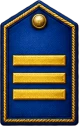
You earn XP equal to three times the enemy power you destroy in battle; when you fight as a squad, the XP is shared by army power. There are 24 ranks from Private to Marshal, and each rank raises your army's battle power by 10%, compounding rank after rank. Everyone can see your rank from the insignia above your name.
| Rank | XP required | Power multiplier |
|---|---|---|
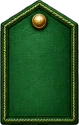  Private Private | 0 | ×1.00 |
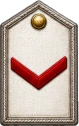  Corporal Corporal | 300 | ×1.10 |
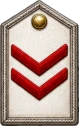  Sergeant Sergeant | 530 | ×1.21 |
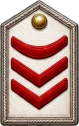  Specialist Corporal Specialist Corporal | 940 | ×1.33 |
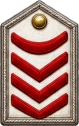  Specialist Sergeant Specialist Sergeant | 1,700 | ×1.46 |
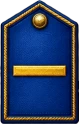  Staff Sergeant Staff Sergeant | 3,000 | ×1.61 |
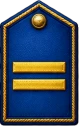 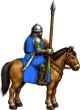 Senior Staff Sergeant Senior Staff Sergeant | 5,300 | ×1.77 |
 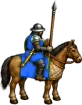 Sergeant First Class Sergeant First Class | 9,400 | ×1.95 |
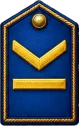  Master Sergeant Master Sergeant | 17,000 | ×2.14 |
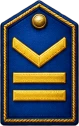  First Sergeant First Sergeant | 29,000 | ×2.36 |
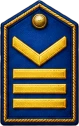  Sergeant Major Sergeant Major | 52,000 | ×2.59 |
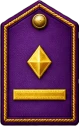  Officer Cadet Officer Cadet | 93,000 | ×2.85 |
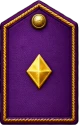  Second Lieutenant Second Lieutenant | 160,000 | ×3.14 |
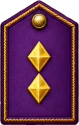  Lieutenant Lieutenant | 290,000 | ×3.45 |
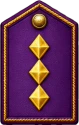  Captain Captain | 520,000 | ×3.80 |
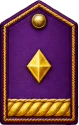 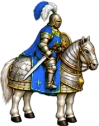 Major Major | 920,000 | ×4.18 |
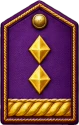 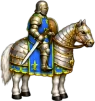 Lieutenant Colonel Lieutenant Colonel | 1,600,000 | ×4.59 |
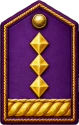 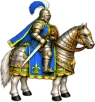 Colonel Colonel | 2,900,000 | ×5.05 |
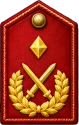  Brigadier General Brigadier General | 5,100,000 | ×5.56 |
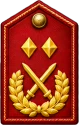  Major General Major General | 9,100,000 | ×6.12 |
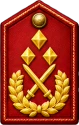 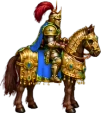 Lieutenant General Lieutenant General | 16,000,000 | ×6.73 |
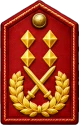 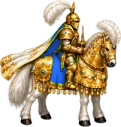 General General | 29,000,000 | ×7.40 |
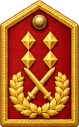 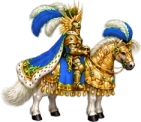 Chief of General Staff Chief of General Staff | 51,000,000 | ×8.14 |
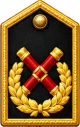 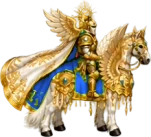 Marshal Marshal | 90,000,000 | ×8.95 |
Account, start and logging out
You start as a guest; your barracks is set to train 9 cavalry for your first army, and the workshop and stable to make their equipment, all paid from your own resources. To keep your progress and play on other devices, save your account with a name and password in the Account tab: an unsaved guest account that is not used for 30 days is deleted together with its castle and progress. Logging out takes a 45-second countdown, and if your connection drops, your avatar and castle stay on the map for 45 more seconds.
What happens while you are offline?
Your castle only stands on the map while you are in the game: it disappears when you log off and you build it again every time you log in; your castle level, buildings, garrison and resources stay with you. Nothing is produced while you are offline, but your army's upkeep does not run either. Building upgrades and the workshop, stable and barracks queues keep going, and if you have set target stocks, automatic production continues with the resources in your storage. Your bank deposit earns no interest while you are offline, but the loan due time keeps running: a debt that cannot be paid from your deposit when it is due costs you your last fief. Kingdoms, wars and tributes also keep running while you are away.
Details: speed, tax and kingdom limits
The bigger your army, the slower you move: at 100 soldiers your speed is halved and it can drop as low as 35%; if more than half of your army is cavalry you move 30% faster, and a catapult counts as five soldiers. Army and garrison upkeep is 0.5 food per soldier per minute (1 for a catapult) and 0.1 gold per point of strength per minute; as soldiers level up their strength, and so their gold upkeep, goes up. If you run out of food or gold the stock simply stays at zero and no soldiers desert. The market charges 2% tax on sales and 1% on purchases, and that gold is burned. If a kingdom has more online members than a seventh of all online players (at least 2), every member with two or more fiefs loses one fief every two hours.
Castle and buildings: level rules
Your castle level is limited by your rank: a Private can have a level 1 castle, and every new rank unlocks one more level (Corporal level 2, Sergeant level 3 … Major General level 20). The Barracks, Workshop and Stable cannot pass the Castle level; the Lumber Mill, Farm, Iron Mine and Mint can go up to level 20 freely. Every castle level adds 2.5% to castle defence: the base ×2 multiplier grows to ×3 at level 20.
Fiefs: how you become a lord
Everyone starts with 1 fief. Your number of fiefs multiplies all resource production: with 2 fiefs you produce twice as much wood, food, iron and gold, with 3 fiefs three times as much. Production time in the workshop, the stable and the barracks is also divided by your number of fiefs, so equipment and soldiers come out that much faster, while upkeep does not go up. Fiefs are permanent: even if your castle is conquered and destroyed or your army is wiped out, nothing happens to your fiefs. That makes them the safest investment in the game. The first purchase costs 1,000 of each of the four resources, and the price doubles with every purchase (2,000, 4,000, 8,000 …). Fiefs also set your bank loan limit (twice the gold you paid for your last fief; with a single fief you cannot borrow) and are one of the factors of strength when a kingdom picks its king. You can only lose a fief in two ways, and you never drop below 1: if a bank loan cannot be paid from your deposit when it is due, your last fief is deleted (even while you are offline), and if your kingdom has more online members than allowed, every member with two or more fiefs loses one fief every two hours.
Build times and target stock
Upgrading the castle from level 1 to level 2 takes 5 minutes, and the time grows with each level; going from level 19 to level 20 takes 200 minutes. Every other building takes half as long as the castle upgrade of the same level, and all buildings can be upgraded at the same time. Each level of the workshop, the stable and the barracks makes production 10% faster, and your number of fiefs divides the time as well. Target stock: in the workshop and the stable you set a target number for each piece of equipment, and in the barracks for each unit type; when the queue is empty, production runs automatically as long as you can afford it, until the stock reaches that number (0 = off). The barracks will not train a soldier if the equipment it needs is not in storage; you keep the equipment coming with target stocks in the workshop and the stable.
Kingdoms: taxes, diplomacy, treasury and war
The king and their powers
The king is the strongest member of the kingdom who is online in the game at that moment. Strength is the product of total XP, number of fiefs, castle level and mint level. The king changes when the king leaves the game or a stronger member logs in. As king you get access to the Diplomacy tab: you declare war and ask for peace. Players join a kingdom only when the king invites them, and only the king can kick a player out of the kingdom, but only a member who has not logged in for the last week. Members can leave the kingdom whenever they like. The king's castle becomes a palace, and members see an arrow pointing to the palace on the map.
Taxes
A 1% kingdom tax is taken from every member's mint income and goes straight into the kingdom treasury. Members of the kingdoms in the top three of the treasury ranking also pay a tithe from their mint income: 3% for the 1st kingdom, 2% for the 2nd and 1% for the 3rd. The tithe goes to no treasury; it is removed from the game, which slows down the strongest kingdoms and makes it harder for one kingdom to take over the whole map. Tax and tithe are only taken from mint income; wood, food and iron are never taxed.
Diplomacy
Only the king decides when to declare war and when to ask for peace. Asking for peace ends the war at once, but the kingdom that asks pays tribute: every two hours it sends 2% of its treasury to the other kingdom's treasury, and each new peace request to the same kingdom raises the rate by 2% (4%, 6% …). You cannot declare war on a kingdom that pays you tribute. If a paying kingdom declares war, its tribute stops at once: if it asks for peace again in that war it is condemned to a bigger tribute, and if the other side asks for peace, the peace comes without tribute and the old tribute ends for good. A kingdom can declare at most one war and ask for peace at most once every 6 hours, so a member who becomes king can't drown the kingdom in tribute with back-to-back wars and peaces.
Kingdom treasury
The treasury fills up in three ways: the members' mint tax, 10% of the loot gold in wars between kingdoms, and the tribute paid by kingdoms that asked for peace. The only thing that leaves the treasury is the tribute the kingdom pays itself. The treasury is never paid out to players and never spent: it grows and decides the kingdom ranking, and the top three kingdoms pay the tithe. A kingdom whose tributes add up to more than 100% sees its treasury fall below zero and collapses; its members stay without a kingdom, keeping their own castles and fiefs. A kingdom none of whose members has played for 7 days is dissolved too: once 7 days have passed since its most recently seen member was online, its members are left without a kingdom, keeping their own castles and fiefs.
War between kingdoms
Members of different kingdoms can only attack each other while their kingdoms are at war; members of the same kingdom cannot attack each other. Players without a kingdom can fight anyone: kingdom members can attack kingdomless players and kingdomless players can attack kingdom members. These rules apply to field battles and castle sieges alike. Wars between kingdoms work just like fights between players without a kingdom: the loser of a field battle loses the army; a fallen castle is destroyed, the resources inside go to the winners and the owner's production buildings drop one level. The only difference is the loot: in a war between two kingdoms, 10% of the gold that changes hands is not burned but goes to the winning kingdom's treasury; in a fight with a kingdomless player it is burned.
Castle placement and kingdom territory
If you are in a kingdom, you can build your castle next to the castle of a player from your own kingdom, at most 15 tiles away; this is how kingdom territories take shape on the map. If your kingdom has no other castle on the map, you can build on any free spot. If you are not in a kingdom, there is no such rule: you can build your castle on any suitable free spot.
Trade relations
A trade relation between two kingdoms can only be made when their kings meet face to face on the map: a king walks up to the king of another kingdom (within 4 tiles), clicks on them and chooses “Offer Trade Agreement”. The offer is valid for 60 seconds. If the other king accepts, 10% of the current treasury is taken from both kingdoms and the relation starts at level 1 for both sides. You cannot make an agreement with a kingdom you are at war with, and two kingdoms can only have one relation with each other. A kingdom can trade with several kingdoms separately; the gains add up.
Each trade level raises the tax income flowing into the kingdom treasury by 1%: level 1 gives +1%, level 2 gives +2% … level 10 gives +10%. The highest level is 10. The king raises the level with the “Upgrade Trade Relation” button in the Diplomacy panel: it costs 10% of the current treasury, taken at once; the upgrade takes 24 hours and its progress shows on a bar. Each side’s level is kept separately, but they can differ by at most 1: if you are at level 5 and the other side is at level 4, you cannot go to 6 until they reach 5. In a relation, each side can run only one upgrade at a time.
The trade gain is added only to the tax that flows from members’ mints into the treasury; loot shares, tribute and other treasury transfers are not increased. If nobody from the other kingdom is online at the moment the income arrives, that relation gives no gain. To stop small kingdoms from being exploited, the two kingdoms’ current tax incomes are compared: if your income is bigger than theirs, your gain shrinks by the same ratio (factor = their income ÷ your income, at most 1). For example, at level 8 with your income at 100 and theirs at 70, you get +5.6% and they get the full +8%. The king sees in the Diplomacy panel how much each relation is earning right now.
If the two kingdoms go to war, the trade relation ends completely: levels are deleted, a running upgrade is cancelled and costs already paid are not refunded. The old relation does not come back after peace; the kings must meet face to face and agree again, and the relation starts from level 1 once more.
No pay to win: our promise 🙂
Bareking will never sell power for money; that is our promise to players. Your progress comes from production, battles and trade, not from your wallet. We still need to cover our server costs somehow, so two things may come later: potions that give a short power boost, which anyone can get for free by watching an ad, and cosmetic skins that do not affect power at all. It will never be a game where money makes you stronger 🙂
Why this sandbox MMORPG fits you
- No download, no install: click the link and play in your browser, on phone as well.
- A real open world: one map, a persistent economy and persistent kingdoms that keep running while you are away.
- Character progression: a 24-rank military hierarchy, squad power that grows with XP, and epaulettes to show it.
- A player economy: prices are set by players on the market and at the bank, not by NPCs.
- Free to play and fair: everyone starts from scratch, and progress comes from production, war and trade, never from buying power.
Age limit and safety
Bareking is for players aged 13 and over; you cannot create an account under 13. Combat is stylised and there is no blood. Players have world chat, private messages and voice chat, and what they write is their own. Abuse, harassment and advertising are not allowed, and accounts that break the rules can be closed. The game is free: there are no real-money purchases and no gambling.
Frequently asked questions
Is Bareking free?
Yes. The game opens free in your browser and you never have to pay to play.
Do I need to download anything?
No. Bareking runs entirely in the browser on Windows, macOS, Linux, Android and iOS.
Can I play on a phone?
Yes. Just tap where you want to go on the map; there is also pinch zoom and a layout made for narrow screens.
Am I playing alone?
No. There are real players on the map: you can form a squad, join a kingdom, trade and talk by voice. Computer-controlled riders also roam the world to keep it lively; they never attack you, but you can attack them.
Does everyone start from scratch?
Yes. Every new player starts on equal terms: one fief, level 1 buildings and a small escort of 9 riders. Nothing in the game is sold for real money, so the only way to become a lord with many fiefs, and one day king, is to play.